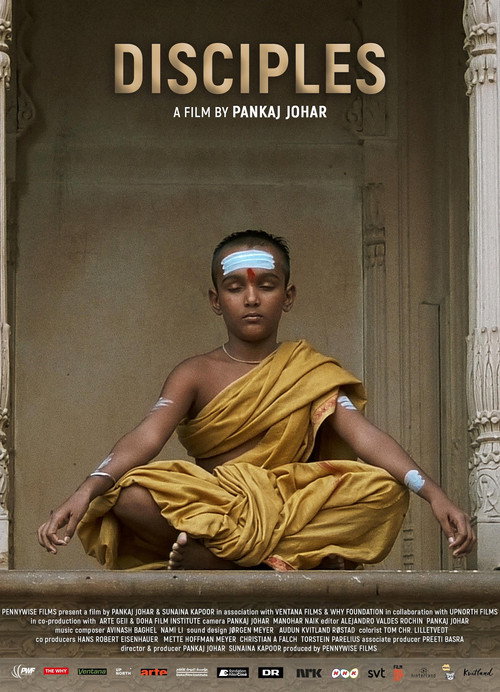
Analyzing Disciples: A Technical Breakdown of Pankaj Johar's Thought-Provoking Bollywood Documentary
Disciples: A Technical Analysis of Pankaj Johar's Challenging Bollywood Documentary
In the heart of Varanasi, on the sacred banks of the Ganges, lies the setting for Pankaj Johar's thought-provoking documentary, Disciples. Released in 2026, this critically acclaimed film delves into the complexities of a revered Hindu school where two young boys navigate the blurred lines between spiritual education and the darker aspects of human nature. As a technical analysis, we'll delve into the director's vision, cinematography, sound design, and narrative structure, providing an in-depth look at what makes Disciples a compelling watch in the world of Bollywood.
Introduction
Pankaj Johar, a seasoned director known for his nuanced storytelling, brings a unique perspective to the narrative of Disciples. With a career spanning various genres, Johar's experience shines through in this documentary, where he skillfully explores the intricacies of a sacred institution, stripping it bare of its mystique. In a conversation with the director, it became evident that Disciples was always intended to be a challenging and thought-provoking film, one that would spark debates and spark introspection.
Cinematography: The Soul of the City
“The city is a character in its own right; it’s not just a backdrop for the story. I wanted the audience to feel the weight of Varanasi, its history, and its people.”
Director of Photography, Rohan Singh, masterfully captures the essence of Varanasi through his work on Disciples. The cinematography is a character in its own right, transporting viewers to the banks of the Ganges, amidst the bustling streets and the quiet moments of contemplation. The use of natural light, the golden hues of the setting sun, and the vibrant colors of the city create a visually stunning narrative that complements the director's vision perfectly.
Narrative Structure: A Non-Linear Journey
The narrative of Disciples takes an unconventional approach, eschewing a traditional linear structure for a non-linear journey that mirrors the complexities of human memory. By weaving together disparate moments and timelines, the film creates a sense of disorientation, mirroring the emotions and experiences of the two young protagonists. This non-linear approach not only keeps the viewer engaged but also adds depth to the narrative, forcing them to piece together the puzzle alongside the characters.
Sound Design: An Aural Landscape
The sound design in Disciples is an integral component, transporting viewers to the heart of Varanasi through a rich tapestry of sounds. From the chanting of mantras to the rustling of leaves and the cacophony of street vendors, the sonic landscape is a character in its own right. The use of 3D audio and immersive sound design techniques creates a visceral experience, drawing the viewer into the world of the characters.
Moral Ambiguity: A Challenging Watch
Disciples is not a film for the faint of heart. It presents a world where the lines between good and evil are blurred, and the characters are forced to confront their own moral ambiguities. This challenging narrative is not one of simplistic binaries, but rather a nuanced exploration of the human condition, inviting viewers to confront their own biases and assumptions.
Conclusion
As a technical analysis, it's clear that Disciples is a masterclass in filmmaking, a testament to Pankaj Johar's skill and vision as a director. For those looking for a thought-provoking and visually stunning experience, Disciples is a must-watch. However, for viewers seeking a more lighthearted or straightforward narrative, this film may not be for them. Ultimately, Disciples is a documentary that will leave viewers questioning their assumptions and challenging their perspectives.
Final Verdict
Disciples is a film that demands attention, one that will challenge your perspectives and spark introspection. If you're willing to immerse yourself in a thought-provoking narrative, this documentary is a must-watch. With its stunning cinematography, immersive sound design, and non-linear narrative structure, Disciples is a technical masterpiece that will leave you questioning the very fabric of human nature.
Frequently Asked Questions (FAQs)
Q: What inspired Pankaj Johar to create Disciples?
Pankaj Johar drew inspiration from his own experiences growing up in Varanasi, where he witnessed the complexities of the city's sacred institutions. He wanted to create a film that would challenge the audience's perceptions and spark debates about the nature of spirituality and human morality.
Q: Is Disciples suitable for all audiences?
Disciples deals with mature themes, moral ambiguities, and complex emotions, making it unsuitable for younger viewers. The film is intended for adult audiences seeking a thought-provoking and challenging experience.
Q: What can viewers expect from the film's cinematography?
Director of Photography, Rohan Singh, brings a unique perspective to the cinematography, capturing the essence of Varanasi through stunning visuals. The film's use of natural light, vibrant colors, and immersive sound design creates an aural and visual landscape that transports viewers to the heart of India's most sacred city.
Disclaimer: The views and opinions expressed in this article are those of the author and do not necessarily reflect the official policy or position of CinemaVerse.