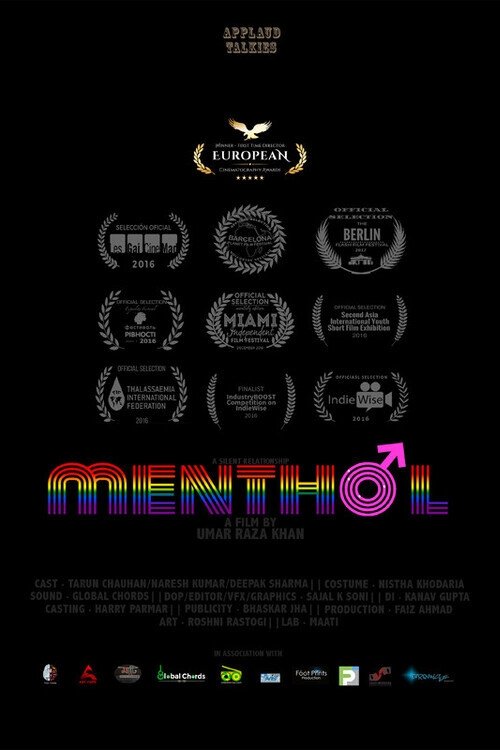
Exploring Bollywood's Queer Narrative in Umar Raza Khan's Powerful 'Menthol' Short Film (2016)
Menthol: A Scathing Exploration of Bollywood's Hidden Realities
Unveiling the Depths of Bollywood's Queer Narrative
In the realm of Bollywood cinema, Umar Raza Khan's 2016 drama, Menthol, stands as a poignant testament to the complexities and challenges faced by the LGBTQ+ community. This 14-minute short film is a masterclass in subtlety, cleverly weaving a narrative that is both intimate and universally relatable. For those familiar with the works of Ang Lee, whose Brokeback Mountain (2005) pioneered the mainstream portrayal of queer love, Menthol offers a similarly nuanced exploration of the closeted gay experience.
Set against the backdrop of a rapidly changing India, Menthol centers around a clandestine gay couple, navigating the treacherous landscape of familial expectations and social taboos. As they celebrate their anniversary in a secret apartment, their stolen glances and hushed whispers belie a deeper anxiety – the constant threat of exposure and the fragility of their sanctuary. This delicate dance of secrecy and love serves as a powerful metaphor for the LGBTQ+ community's struggle for acceptance and visibility.
Khan's direction is marked by an unflinching gaze, illuminating the intricate web of societal expectations and patriarchal norms that suffocate the couple's love. The film's use of close-ups, long takes, and carefully calibrated sound design creates a sense of tension, underscoring the characters' emotional vulnerability. This deliberate pacing allows the audience to immerse themselves in the couple's world, empathizing with their plight and investing in their fragile love story.
"'Menthol' is not just a film about gay love; it's a scathing critique of the societal machinery that perpetuates homophobia and oppression.'
One of the most striking aspects of Menthol is its nuanced portrayal of masculinity. The characters' performances are characterized by a vulnerability and sensitivity that challenges traditional notions of masculinity, offering a refreshing respite from the conventional Bollywood hero archetype. Khan's writing is astute in its observation of the characters' emotional landscapes, capturing the quiet despair and desperation that often accompanies secrecy and isolation.
While Menthol may be a short film, its impact is anything but fleeting. Khan's vision is a powerful assertion of the LGBTQ+ community's existence, a testament to the resilience of love in the face of adversity. As a work of storytelling, Menthol is a triumph, its brevity belied by a depth and complexity that lingers long after the credits roll.
Ultimately, Menthol is a film that will resonate with anyone who has ever felt the need to hide a part of themselves. It is a searing indictment of societal norms and a powerful celebration of love's transformative power. For those interested in exploring the queer narrative in Bollywood cinema, Menthol is an essential watch, offering a window into a world that is both intimate and universal.
Who Should Watch 'Menthol'? And Who Might Not Enjoy It?
Viewers interested in LGBTQ+ representation in Bollywood cinema, particularly those who appreciate nuanced portrayals of queer love and identity, will find Menthol to be a compelling and thought-provoking watch. Additionally, those who appreciate subtle, character-driven storytelling and are willing to engage with the complex emotional landscapes of the characters will find Menthol to be a rich and rewarding experience.
However, viewers seeking a more conventional narrative or a film with a broader scope may find Menthol's narrow focus on the couple's relationship to be limiting. Additionally, those who prefer a more overtly dramatic tone may find the film's measured pace to be too slow.
Verdict: A Must-See for LGBTQ+ Advocates and Storytelling Enthusiasts
Umar Raza Khan's Menthol is a masterpiece of subtlety, a nuanced exploration of the queer experience that lingers long after the credits roll. While its brevity may limit its appeal for some, its depth and complexity make it a must-see for any viewer interested in LGBTQ+ representation and storytelling in Bollywood cinema.
This powerful and poignant film is a testament to the enduring power of love and the human spirit, and it serves as a vital reminder of the importance of acceptance and visibility in our increasingly diverse world.