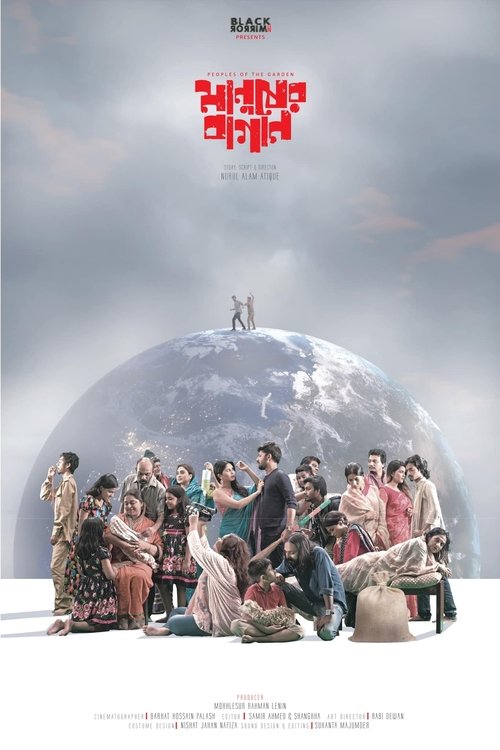
Exploring the Depths of Bengali Cinema with Peoples of the Garden
Peoples of the Garden (2020): Unpacking the Nuances of Bengali Cinema's Hidden Gem
Nurul Alam Atique's Peoples of the Garden is a cinematic tapestry woven with intricate threads of human experience, a poignant reflection of the Bengali society through the prism of five disparate stories. Released in 2020, this drama masterfully navigates the complex web of social hierarchies, shedding light on the untold stories of people often relegated to the periphery. As a director, Atique skillfully weaves together seemingly disparate narrative threads, creating a rich tapestry that serves as a testament to the resilience of the human spirit.
The Power of Fragmented Storytelling
One of the most striking aspects of Peoples of the Garden is its innovative storytelling approach. By presenting five distinct narratives, Atique cleverly subverts the conventional narrative structure, allowing each character to breathe and evolve in their own unique environment. This deliberate fragmentation serves as a powerful metaphor for the disjointed nature of modern life, where individuals are often fragmented and disconnected despite being part of the same broader social fabric.
Take, for instance, the character of Arjun (played by Nasir Uddin Khan), a young man struggling to find his place in the world amidst the constraints of a traditional Bengali household. Arjun's narrative arc serves as a poignant reminder of the tension between cultural heritage and individual aspirations. Through his story, Atique masterfully captures the essence of the Bengali experience, where tradition and modernity coexist in a delicate dance.
'The beauty of Peoples of the Garden lies in its ability to humanize the often invisible lives of people from the margins of society.' - Nurul Alam Atique, Director
This insight underscores the central theme of the film, which is the importance of empathy and understanding in breaking down social barriers. By investing in the lives of his characters, Atique invites the audience to do the same, fostering a sense of connection and shared humanity that transcends social classes.
The Unseen Lives of Bengali Society
Peoples of the Garden is a film that unapologetically confronts the harsh realities of Bengali society, where social hierarchies and economic disparities have created a landscape of stark contrasts. Through the lens of his characters, Atique sheds light on the invisible lives of people often overlooked, marginalized, or silenced. The film's portrayal of these characters serves as a powerful indictment of a society that perpetually fails to address the needs of its most vulnerable members.
The character of Shanta (played by Orchita Sporshia), a widow struggling to make ends meet, stands out as a powerful example of this. Shanta's narrative serves as a stark reminder of the challenges faced by women in Bengali society, where economic insecurity and social isolation can be devastating consequences of a patriarchal system that fails to support its most vulnerable members.
A Recommendation from the Heart
Peoples of the Garden is a film that will leave you changed, perhaps even challenged. It is a film that will make you question the assumptions you hold about the people around you, and the world we live in. As I reflect on my experience of watching this film, I am reminded of the power of cinema to humanize, to empathize, and to connect us across the boundaries of social class, culture, and geography.
So, if you're looking for a film that will touch your heart, ignite your mind, and leave a lasting impact on your soul, I recommend Peoples of the Garden without hesitation. It is a film that will stay with you long after the credits roll, a testament to the enduring power of human stories to connect us, to inspire us, and to change us.