Understanding the Epic Bravery of 'Vedaat Marathe Veer Daudale Saat': Dialogues Analysis
Unpacking the Epic Bravery: A Dialogues Analysis of "Vedaat Marathe Veer Daudale Saat" (2027)
As we witness the valiant deeds of the Maratha Empire's seven brave warriors in "Vedaat Marathe Veer Daudale Saat," one cannot help but ponder: what fuels the unquenchable thirst for Swaraj (self-rule) in the human spirit?
Historical Relevance in the Modern Age
The year 1674 serves as a potent backdrop for this epic drama, set amidst the tumultuous landscape of the Maratha Empire. The film's meticulously woven narrative not only sheds light on the pivotal events of that era but also encourages viewers to draw parallels with contemporary struggles for self-emancipation.
The Power of the Dialogue
Dialogue in "Vedaat Marathe Veer Daudale Saat" is more than mere conversation; it's a tool that propels the story forward, imbuing the characters with a sense of purpose and conviction. Director Mahesh Manjrekar masterfully leverages the conversations to convey the emotional depth of the characters, making their experiences relatable and authentic.
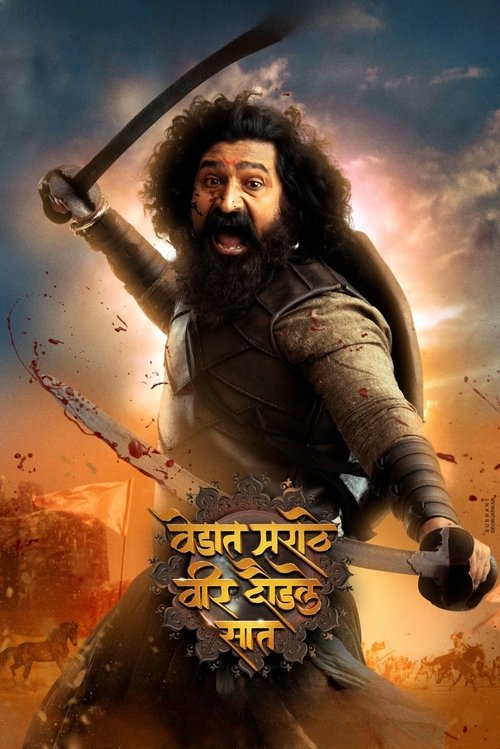
The film's protagonists, Prataprao Gujar (Pravin Tarde), Chandraji Kothar (Vishal Nikam), Malhari Lokhande (Hardik Joshi), Dattaji Page (Satya Manjrekar), Suryaji Dandkar (Utkarsh Shinde), Tulja Jamkar (Jay Dudhane), and Jivaji Patil (Virat Madake), are all brought to life through their conversations, which reveal their passions, fears, and motivations. These poignant exchanges humanize the historical figures, making their bravery and sacrifice all the more heart-wrenching.
The Weight of Legacy
One of the most striking aspects of the dialogue is the way it tackles the weight of legacy. The characters are acutely aware of the responsibility that comes with forging a new path for their people. Their conversations are peppered with references to the Maratha Empire's storied past and the dreams of their ancestors. This self-awareness lends a sense of gravitas to the characters, underscoring the gravity of their decisions.
For instance, in one poignant exchange, Prataprao Gujar remarks, "Ek samaj ki utsah hoga, to ek samaj ka naya path banega." ("If a society has the drive, a new path for that society will be forged.") This statement underscores the character's conviction in the power of collective action and serves as a powerful reminder that the pursuit of Swaraj is not a solitary endeavor, but a community-driven one.
Dialogue as Social Commentary
Through its dialogue, "Vedaat Marathe Veer Daudale Saat" also offers a nuanced commentary on the societal norms of the time. The characters' conversations often touch on the intricacies of Maratha society, highlighting the complexities of caste, social hierarchy, and the role of women in these patriarchal societies.
One particularly thought-provoking exchange occurs when Chandraji Kothar remarks, "Yadon ki shabdhiyan, hain kuch cheezon par aadhar." ("The echoes of yesteryear's words are the foundation upon which some things are built.") This statement serves as a scathing critique of the way societal norms can be shaped by the words of the past, even as they seek to move forward.
Conclusion
"Vedaat Marathe Veer Daudale Saat" is a testament to the enduring power of the human spirit, a reminder that the pursuit of self-rule and self-emancipation knows no bounds of time or place. As we witness the valiant deeds of the Maratha Empire's seven brave warriors, we are reminded of the importance of collective action, the weight of legacy, and the power of dialogue in shaping our understanding of the world around us.
In an era where the boundaries between history and fiction are increasingly blurred, "Vedaat Marathe Veer Daudale Saat" serves as a powerful reminder of the importance of preserving our cultural heritage and the need for social commentary in the modern age. This epic drama is a shining example of the potential of Marathi Cinema to captivate audiences and inspire a new generation of filmmakers.
As the great Maratha warrior, Chhatrapati Shivaji Maharaj (Akshay Kumar), so eloquently puts it, "Swatantrata ki raksha karni hai, to jeevan ki raksha karne wale hon." ("To protect freedom, one must be willing to protect their very lives.") This statement serves as a potent reminder that the pursuit of Swaraj is a journey that knows no bounds, a testament to the unyielding spirit of the human heart.