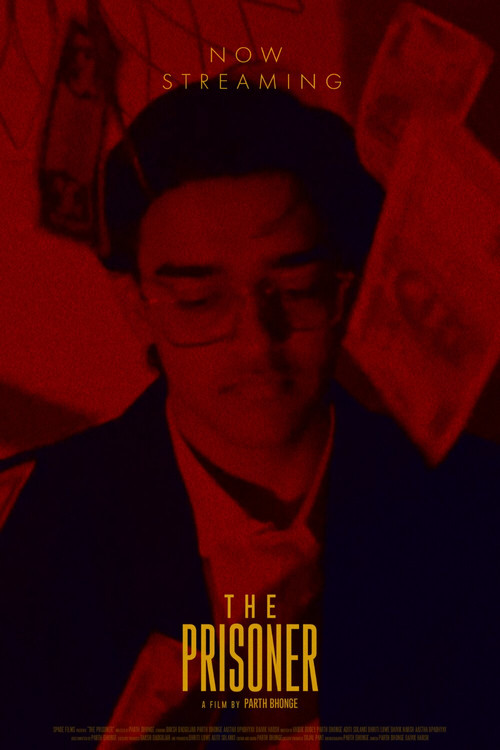
Unraveling the Mental Turmoil in Parth Bhonge's Haunting Bollywood Short Film 'The Prisoner'
The Prisoner: A Mind-Bending Masterclass in Mental Turmoil and Human Connection
In a cinematic landscape dominated by formulaic storytelling, Parth Bhonge's 'The Prisoner' emerges as a breath of fresh air, a daring short film that defies conventions to craft a thought-provoking narrative that lingers long after the credits roll. This 19-minute Bollywood drama, released in 2026, is a testament to the power of nuanced storytelling, where the lines between reality and madness are expertly blurred. With its tight script, masterful direction, and outstanding performances, 'The Prisoner' is an unforgettable experience that will leave audiences questioning the true nature of sanity.
Unraveling the Web of Daksh's Mental Battles
At the center of 'The Prisoner' is Daksh, a complex character navigating the treacherous waters of his own mind. Parth Bhonge, who also wrote and edited the film, skillfully weaves a narrative that showcases Daksh's inner turmoil through his relationships with Maaya and Yatharth. These two individuals, played by Aastha Upadhyay and Daivik Harsh respectively, serve as Daksh's emotional anchors, providing a sense of stability in a world that seems to be rapidly unraveling. However, the introduction of Satyam, played by none other than Parth Bhonge himself, throws Daksh's world into chaos, forcing him to confront the darkest corners of his own psyche.
Through Daksh's interactions with these three characters, Bhonge expertly explores the themes of mental health, relationships, and the blurred lines between reality and fantasy. The film's use of symbolism, particularly the recurring motif of a locked door, adds a layer of depth to the narrative, hinting at the idea that Daksh's mental battles are, in fact, a prisoner of his own making.
A Haunting Exploration of Human Connection
One of the most striking aspects of 'The Prisoner' is its portrayal of human connection in the face of adversity. Daksh's relationships with Maaya and Yatharth are built on a foundation of trust, empathy, and understanding, serving as a powerful counterpoint to the chaos introduced by Satyam. Through these characters, Bhonge highlights the importance of human connection in sustaining us during our darkest moments, while also acknowledging the fragility of these relationships in the face of external pressures.
The film's climax, featuring a heart-wrenching confrontation between Daksh and Satyam, is a masterclass in tension and emotional release. Bhonge's direction is economical yet effective, using the constraints of a short film to build a sense of claustrophobia that mirrors Daksh's growing desperation. The result is a scene that is both shattering and cathartic, leaving the viewer breathless and eager for more.
The Mind-Bending Realization That Changes Everything
At the heart of 'The Prisoner' lies a mind-bending realization that upends the entire narrative. Without giving away too much, the film's climax features a stunning twist that challenges the audience's perceptions of reality, forcing them to reconsider everything they thought they knew about Daksh's world. This twist is a testament to Bhonge's bold storytelling, which never shies away from pushing the boundaries of convention in pursuit of a more nuanced and thought-provoking narrative.
The implications of this twist are far-reaching, challenging the audience to re-evaluate the relationships between Daksh, Maaya, Yatharth, and Satyam. It raises questions about the nature of sanity, the fragility of human connection, and the blurred lines between reality and fantasy. In doing so, 'The Prisoner' becomes a thought-provoking exploration of the human condition, one that will linger long after the credits roll.
Parth Bhonge's Visionary Direction
Parth Bhonge's direction is the unsung hero of 'The Prisoner', elevating the film from a simple drama to a complex, thought-provoking masterpiece. His use of long takes, close-ups, and symbolism creates a visually stunning narrative that is both haunting and beautiful. Bhonge's direction is a testament to his mastery of the medium, one that will be remembered for years to come.
Conclusion: The Lasting Impact of 'The Prisoner'
'The Prisoner' is a film that will leave audiences reeling, questioning the nature of reality and the fragility of human connection. With its bold storytelling, masterful direction, and outstanding performances, it is a cinematic experience that will be remembered for years to come. As a genre-defying short film, 'The Prisoner' challenges the conventions of Bollywood storytelling, pushing the boundaries of what is possible in a narrative that is both concise and impactful.
The Prisoner: FAQs
Q: What inspired Parth Bhonge to make 'The Prisoner'?
A: While specific details about the film's conception are scarce, it's clear that Bhonge was driven by a desire to push the boundaries of storytelling and explore the complexities of the human mind.
Q: What is the significance of the locked door motif in 'The Prisoner'?
A: The locked door symbolizes Daksh's mental battles, representing the confinement of his own mind. It serves as a powerful metaphor for the idea that our fears and insecurities can often be self-imposed, trapping us in a world of our own making.
Q: Will there be a sequel to 'The Prisoner'?
A: As of the time of this writing, there has been no official announcement regarding a sequel to 'The Prisoner'. However, given the film's critical success and the passion of its fans, it's possible that we may see more from Parth Bhonge and his team in the future.
Disclaimer: The views and opinions expressed in this article are those of the author and do not necessarily reflect the official policy or position of CinemaVerse.