Unraveling the Mind-Bending Thrills of Md Aniruddho Rahi's Reverse Myself, a Pivotal Bengali Cinema Film
Reverse Myself: Unpacking the Time-Bending Thrills of Bengali Cinema in 2027
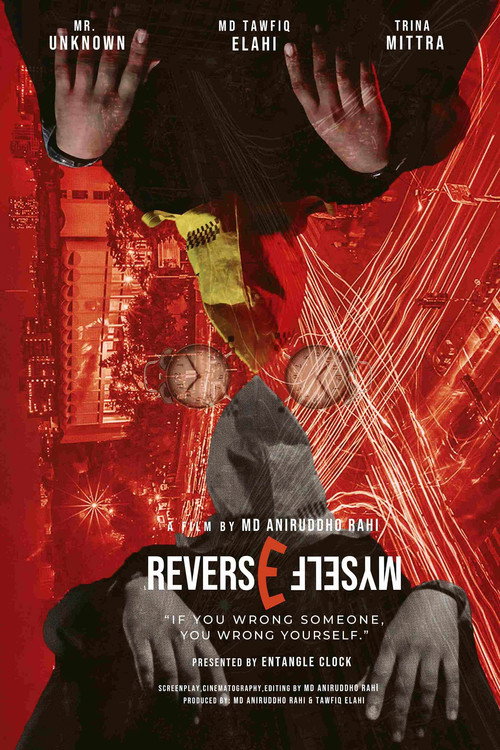
The year 2027 has been a pivotal one for Bengali Cinema, witnessing a surge in innovative storytelling and boundary-pushing narratives. Among these, Md Aniruddho Rahi's Reverse Myself stands out as a masterclass in genre-bending, delivering a thought-provoking drama that defies conventions and leaves audiences questioning the very fabric of reality.
Unlocking the Enigma of the Main Character's Journey
At its core, Reverse Myself revolves around the protagonist's desperate attempt to reclaim his memories and return home after drowning in a pond and being transported to another dimension. This setup may seem straightforward, but it's the execution and the themes that elevate the film to new heights.
The protagonist's obsession with recovering the stolen device and restoring his memories serves as a catalyst for a deeper exploration of his psyche. Through his journey, we witness a complex web of emotions, desires, and regrets that are expertly woven together to create a rich tapestry of human experience.
One of the standout aspects of Reverse Myself is its thought-provoking commentary on the nature of time and memory. The film's use of non-linear storytelling and time loops creates a sense of disorientation, reflecting the protagonist's own disconnection from reality. This innovative approach challenges the audience's perceptions and forces them to question the reliability of memory and the human experience.
The Power of Symbolism in a Cinematic Universe
Symbols and metaphors are woven throughout the narrative, adding layers of depth and meaning to the story. The pond, for instance, serves as a symbol of the protagonist's connection to his past and his emotional vulnerability. The device, on the other hand, represents the key to unlocking his memories and reclaiming his sense of identity.
The film's use of symbolism is a testament to the director's skill in crafting a narrative that is both personal and universal. By drawing parallels between the protagonist's journey and the audience's own experiences, Reverse Myself creates a sense of connection and empathy that is rare in contemporary cinema.
The Cinematic Craftsmanship of Md Aniruddho Rahi
As the director, editor, and screenwriter of Reverse Myself, Md Aniruddho Rahi demonstrates a level of cinematic craftsmanship that is truly exceptional. The film's compact runtime of 14 minutes belies its complexity and density, showcasing the director's skill in distilling the essence of the story into a concise and impactful narrative.
The film's use of sound design, cinematography, and visual effects is also noteworthy, creating a dreamlike atmosphere that perfectly captures the protagonist's disorientation and confusion. Rahi's direction is a masterclass in subtlety, using long takes and static camera shots to create a sense of intimacy and immediacy that draws the audience into the world of the film.
"The most potent form of storytelling is not about revealing secrets, but about unlocking the doors of perception in the audience." – Md Aniruddho Rahi, Director of Reverse Myself
Legacy and Impact: Reverse Myself in the Context of Bengali Cinema
As a work of avant-garde cinema, Reverse Myself has already made a significant impact on the Bengali film industry, pushing boundaries and challenging the status quo. The film's release in 2027 marked a turning point in the history of Bengali Cinema, signaling a new era of innovation and experimentation that will undoubtedly shape the future of the industry.
As we reflect on the legacy of Reverse Myself, we are reminded of the power of cinema to transcend time and space, speaking to universal themes and emotions that connect us all. In an era of increasingly fragmented and homogenized entertainment, Reverse Myself serves as a beacon of hope and creativity, inspiring new generations of filmmakers to push the boundaries of what is possible on the big screen.