Exploring Life Lessons in 100 Stairs to Childhood: A Masterclass in Miniaturization
Direction Analysis: Exploring the Uncharted Terrain of 100 Stairs to Childhood
A Masterclass in Miniaturization: 100 Stairs to Childhood
Released in 2026, 100 Stairs to Childhood, a poignant drama from the Bollywood industry, stands as a testament to the unwavering commitment of its director, Tillottam Pawar. With a runtime of 2 minutes, this film defies conventional norms, instead opting for a deliberate and calculated approach to storytelling. It's a film that invites us to reflect on the nature of childhood, the passage of time, and the human experience.
In many ways, 100 Stairs to Childhood reminds me of Hayao Miyazaki's critically acclaimed Spirited Away (2001), another work of cinematic mastery that explores the complexities of childhood. Like Miyazaki, Pawar employs a subtle and introspective approach, coaxing profound emotions from a deceptively simple narrative. As we delve deeper into the film, it becomes clear that Pawar's true focus lies in evoking a sense of nostalgia and longing, rather than merely telling a story.
Visual Storytelling: A Marriage of Composition and Emotion
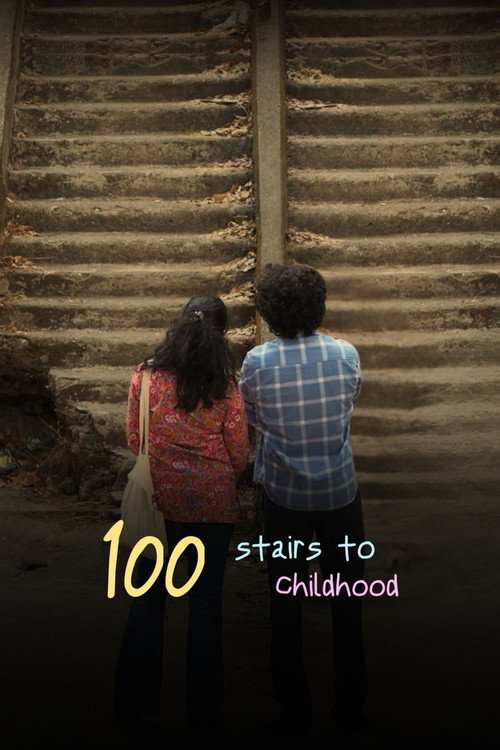
Composition is at the heart of Pawar's direction, with each frame carefully crafted to evoke a specific emotional response from the viewer. The use of negative space, for instance, serves to amplify the sense of isolation and disconnection, while the deliberate pacing creates a sense of intimacy and vulnerability. The film's color palette, too, plays a crucial role in establishing the tone and mood, with muted hues adding to the overall sense of melancholy.
One of the most striking aspects of 100 Stairs to Childhood is its ability to convey complex emotions through subtle visual cues. A single glance, a hesitant step, or a barely audible whisper can speak volumes about the character's inner turmoil. Pawar's masterful control over visual storytelling ensures that every frame is imbued with meaning, inviting the viewer to engage with the narrative on a deeper level.
Performance: The Power of Impermanence
Prashasti Kumud's performance in 100 Stairs to Childhood is nothing short of captivating, bringing a sense of vulnerability and relatability to the character. Her nuanced delivery, replete with subtle expressions and hesitant body language, perfectly captures the fragility of childhood. The film's use of sound design, too, adds to the overall sense of realism, with the sound of footsteps, whispers, and other ambient noises serving to immerse the viewer in the world of the character.
The performance of Prashasti Kumud is a testament to Pawar's skill as a director, who is able to elicit remarkable depth from her actors. The film's minimalism, in fact, serves to highlight the power of performance, as the actors are forced to communicate complex emotions through subtle, almost imperceptible cues.
Editorial Decisions: A Symphony of Pacing
The editing in 100 Stairs to Childhood is a masterclass in pacing, with each cut carefully calibrated to create a sense of tension and release. The film's use of jump cuts, in particular, serves to disrupt the viewer's sense of expectation, adding to the overall sense of unease and disorientation. The editing is also notable for its use of sound design, with the careful placement of sound effects serving to reinforce the visual narrative.
Pawar's decision to employ a non-linear narrative structure, too, adds to the overall sense of complexity and depth. By blurring the lines between past and present, the film invites the viewer to engage with the narrative on a more abstract level, rather than simply following a linear storyline.
Themes: The Passage of Time and the Fragmentation of Childhood
At its core, 100 Stairs to Childhood is a film about the passage of time and the fragmentation of childhood. As the character navigates the labyrinthine staircase, the film invites us to reflect on the nature of memory and the way we experience the world around us. The film's use of metaphor, too, serves to convey the idea that childhood is not a fixed state, but rather a fluid and ever-changing experience.
The film's critique of societal norms, too, is a powerful commentary on the way we view childhood. By depicting a world where childhood is a distant memory, rather than a present reality, the film invites us to question our assumptions about the nature of childhood and the way we treat children.
A Masterclass in Miniaturization: Conclusion
100 Stairs to Childhood is a film that will linger long after the credits roll. Its exploration of childhood, memory, and the passage of time is both poignant and thought-provoking, inviting the viewer to engage with the narrative on a deeper level. As a director, Tillottam Pawar demonstrates a mastery of visual storytelling, performance, and pacing, creating a film that is both a technical achievement and a work of emotional resonance.
Final Verdict
100 Stairs to Childhood is a film that will be remembered for years to come, not just as a technical achievement, but as a work of cinematic art that challenges our assumptions and invites us to reflect on the world around us. With its masterful direction, nuanced performances, and thoughtful themes, this film is a must-see for anyone interested in the art of storytelling.
Frequently Asked Questions (FAQs)
Q: What is the significance of the staircase in 100 Stairs to Childhood?
A: The staircase serves as a metaphor for the passage of time and the fragmentation of childhood. As the character navigates the staircase, the film invites us to reflect on the nature of memory and the way we experience the world around us.
Q: What inspired the director to create such a minimalist narrative?
A: The director's goal was to create a sense of intimacy and vulnerability, forcing the viewer to engage with the narrative on a deeper level. The use of negative space, deliberate pacing, and subtle visual cues serve to amplify this sense of intimacy.
Q: What is the impact of the film's non-linear narrative structure?
A: The non-linear narrative structure serves to disrupt the viewer's sense of expectation, adding to the overall sense of complexity and depth. By blurring the lines between past and present, the film invites the viewer to engage with the narrative on a more abstract level.
Disclaimer: The views and opinions expressed in this article are those of the author and do not necessarily reflect the official policy or position of CinemaVerse.