Exploring Mumbai's Underworld in Dishkiyaoon: A Gripping Bollywood Thriller
Dishkiyaoon: An Unsettling Portrait of Mumbai's Underbelly through Symbolic Lens
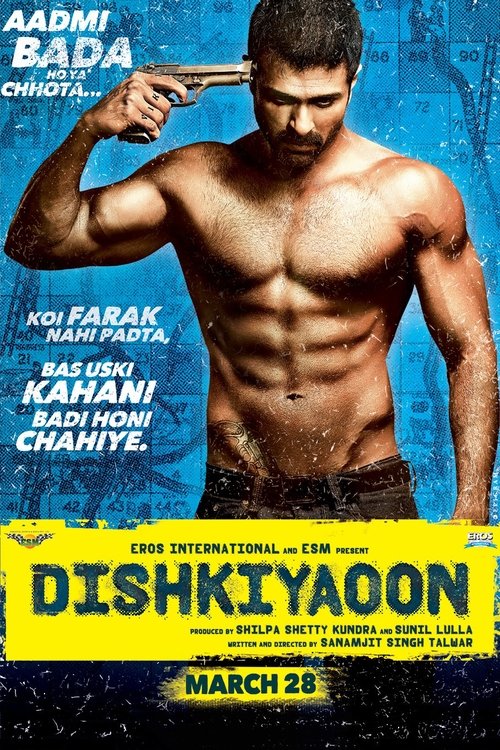
Sanamjit Singh Talwar's directorial debut, Dishkiyaoon, released in 2014, is a bold, unflinching look at the dark underbelly of Mumbai's underworld. This Bollywood thriller is more than a gripping narrative; it's an exploration of the corrupting influence of power, the blurred lines between right and wrong, and the crippling effects of trauma. Through its well-crafted symbolism, Talwar masterfully crafts a world where the lines between heroism and villainy are constantly shifting, leaving the viewer questioning the very notion of morality.
The City as Character
In Dishkiyaoon, the city of Mumbai is a living, breathing entity that exerts a profound influence on its characters. The film's use of location shots, often shot in a gritty, unvarnished style, reinforces the idea that the city's streets are both a character in their own right and a catalyst for the events that unfold. Mumbai's labyrinthine streets, its crowded markets, and its crumbling infrastructure serve as a constant reminder of the city's raw energy and its capacity for both beauty and ugliness. This symbolic representation of the city as a character is a deliberate choice, highlighting the ways in which the urban environment shapes the people who inhabit it.
"The city is a mirror, reflecting the darkest aspects of our nature." - Sanamjit Singh Talwar's unspoken mantra seems to reverberate throughout the film.
The Mask of Heroism
One of the most striking aspects of Dishkiyaoon is its portrayal of heroism. The film's protagonist, Viki Kartoos (Harman Baweja), is a young man with a troubled past, driven by a desire for revenge against the gangsters who killed his brother. However, as the narrative unfolds, Viki's actions become increasingly morally ambiguous, raising questions about the nature of heroism and the consequences of our actions. Through Viki's character, Talwar critiques the notion of heroism as a simplistic binary, revealing instead a complex web of motivations and justifications that often masquerade as virtue. This nuanced exploration of heroism serves as a scathing commentary on the ways in which we often justify our own complicity in systems of oppression.
The Weight of Trauma
Dishkiyaoon is also a powerful exploration of the long-term effects of trauma on individuals and communities. The film's depiction of Viki's emotional state, marked by flashbacks, nightmares, and an almost palpable sense of pain, serves as a searing reminder of the impact of violence on the human psyche. This portrayal of trauma is not just a narrative device but a deliberate choice, highlighting the ways in which our experiences shape us in ways that are often invisible to the naked eye. Through Viki's character, Talwar sheds light on the often-undiagnosed effects of trauma, encouraging viewers to confront the ways in which their own experiences may be influencing their actions and decisions.
A Reflection of Our Own Morality
Ultimately, Dishkiyaoon is a film that asks more questions than it answers. As we watch Viki navigate the treacherous underworld of Mumbai, we are forced to confront our own moral ambiguities and the ways in which we justify our own complicity in systems of oppression. Talwar's direction is a masterclass in subtlety, refusing to offer easy answers or simple solutions. Instead, the film leaves us with a complex, unsettling portrait of a city and its people, challenging us to confront the darker aspects of our own nature. As we finish the film, we are left with a haunting question: what would we do if we found ourselves in Viki's shoes, faced with the same moral dilemmas and traumatic experiences?