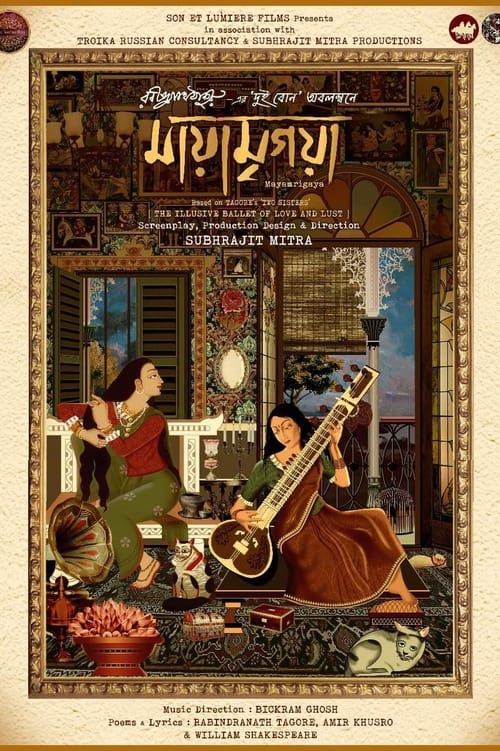
Mayamrigaya: A Cinematographic Journey Through Bengali Cinema's Poignant Exploration of Politics and Culture
Cinematography Breakdown: Capturing the Essence of Mayamrigaya, a Poignant Exploration of Bengali Cinema
As the camera pans over the sun-drenched fields of rural Bengal, it's impossible not to feel a deep sense of longing in Mayamrigaya, a poignant drama that delves into the intersection of politics, culture, and personal identity. One can't help but wonder: what is the true cost of revolution, and how does it shape the individuals who fight for it?
The film, directed by Subhrajit Mitra and starring Priyanshu Chatterjee as the enigmatic Rabindranath Tagore, is a masterclass in cinematography that not only pays homage to the rich cultural heritage of Bengali cinema but also raises important questions about the nature of art and activism. Anirban Chatterjee's director of photography work is a key factor in bringing this complex narrative to life, weaving a visual tapestry that is at once both intimate and sprawling.
The Power of Location: Grounding the Story in Reality
From the opening frames, it's clear that Mitra and Chatterjee are deeply invested in the landscapes of rural Bengal. The camera lingers on the rolling hills, the paddy fields, and the crumbling colonial-era architecture, imbuing the story with a sense of place and history. This is not just a film about politics and revolution; it's also a love letter to the land and its people.
"The camera is not just a tool, it's a witness to the truth. We used natural light and location shooting to capture the essence of the story, to make the audience feel like they're experiencing it firsthand." - Anirban Chatterjee, Director of Photography
This attention to detail extends to the costume design, which is steeped in the traditions of Bengali culture. Poulami Gupta's work is a testament to the rich textiles and craftsmanship of the region, adding layers of depth and meaning to the characters' interactions.
Visual Storytelling: Where Politics Meets Art
As the story unfolds, the cinematography becomes increasingly politicized, reflecting the turmoil and upheaval of the period. The camera work becomes more frenetic, capturing the chaos and urgency of the revolution. This is not just a film about politics; it's also a meditation on the role of art in shaping our understanding of the world.
One of the most striking aspects of Mayamrigaya is its use of color, which is both subtle and bold. The palette is muted, reflecting the earthy tones of the rural landscape, but also infused with bursts of vibrant color that evoke the passion and idealism of the revolutionaries.
A Cinematic Odyssey: Where Past Meets Present
Mayamrigaya is a film that defies easy categorization, blending elements of drama, history, and politics to create a cinematic odyssey that is both sweeping and intimate. Through its use of cinematography, the film creates a sense of timelessness, one that transcends the boundaries of era and geography.
As the credits roll, one can't help but wonder: what does it mean to be a part of something greater than oneself, to be swept up in the tide of history? Mayamrigaya may be a film about revolution and politics, but at its core, it's a exploration of the human condition, a reminder that even in the midst of turmoil, there is beauty to be found.
Conclusion
Mayamrigaya is a testament to the power of cinematography in bringing a story to life, in capturing the essence of a moment in time and space. As the camera pans out, one is left with a sense of awe and wonder, a reminder that even in the most unexpected places, beauty and truth can be found. But as we gaze out at the sun-drenched fields of rural Bengal, we can't help but ask: what lies beyond the frame, waiting to be captured?